
Call us now :07313727068
 Send Inquiry
 Send Inquiry
Copper Nickel 70 Flange
Price 3300 INR/ Piece
MOQ : 20 Pieces
Copper Nickel 70 Flange Specification
- Dimension (L*W*H)
- Custom as per requirement
- Purity
- 70% Copper, 30% Nickel
- Application
- Marine engineering, Shipbuilding, Offshore, Seawater piping
- Grade
- CuNi 70/30, UNS C71500
- Feature
- Corrosion Resistant, High Strength, Good Weldability
- Product Type
- Pipe Flange
- Material
- Copper Nickel 70 (CuNi 70/30)
- Standard
- ANSI
- Shape
- Round
- Surface
- Other
- Connection
- Welded / Bolted
- Technics
- Forged
- Pressure
- Class 150 / 300 / 600 / 900 / 1500
- Size
- 1/2 to 48 (DN15 to DN1200)
- Color
- Metallic Bronze
- Density
- 8.94 g/cm³
- Bolt Hole Diameter
- As per ANSI B16.5 / Custom
- Tolerance
- ±0.5 mm
- Weight
- Depends on size
- Manufacturing Origin
- India
- Packing
- Wooden box/pallet
- Temperature Range
- Up to 400°C
- Hardness
- 90-110 HB
- Finishing
- Smooth / Pickled / Polished options available
- Ends Type
- Raised Face (RF), Flat Face (FF), Ring Type Joint (RTJ)
Copper Nickel 70 Flange Trade Information
- Minimum Order Quantity
- 20 Pieces
- Payment Terms
- Paypal, Cash in Advance (CID), Cheque
- Supply Ability
- 1000 Pieces Per Month
- Delivery Time
- 7 Days
- Main Domestic Market
- All India
About Copper Nickel 70 Flange
Specifications: Common Types of Flanges:
Weld Neck Flange WN
Slip On Flange SO
Blind Flange BL
Socket Weld Flange SW
Lap Joint Flange LJ
Threaded Flange TH
Material Grades:
Carbon Steel: ASTM A105, A350 LF2
Stainless Steel: SS 304, SS 316, SS 321
Alloy Steel: ASTM A182 F11, F22, F91
Duplex Steel Super Duplex: UNS S31803, S32750
Engineered for Demanding Marine Applications
Copper Nickel 70 flanges are purpose-built for marine engineering, shipbuilding, and seawater piping, where durability and corrosion resistance are paramount. Designed using CuNi 70/30, these flanges excel in offshore and harsh saltwater environments. Their metallic bronze color and robust, round shape ensure both performance and aesthetic appeal in critical infrastructure projects.
Precision Manufacturing & Quality Assurance
Manufactured in India using advanced forging techniques, these flanges conform to major ANSI standards, with bolt hole diameters as per ANSI B16.5 or custom requirements. Each piece undergoes rigorous quality checks for hardness (90-110 HB), dimensional accuracy (0.5 mm), and surface finishing. The result is a reliable, high-strength connection for welded or bolted piping systems, packed securely for transport in wooden boxes or pallets.
FAQ's of Copper Nickel 70 Flange:
Q: How do Copper Nickel 70 flanges withstand harsh environments?
A: Copper Nickel 70 flanges, with a 70% copper and 30% nickel composition, offer superior corrosion resistance and structural integrity. Their material properties and high-strength forged construction allow them to perform effectively in demanding marine and offshore applications, resisting saltwater-induced corrosion and mechanical stress.Q: What end types are available for Copper Nickel 70 flanges and how do I select the right one?
A: These flanges are available in Raised Face (RF), Flat Face (FF), and Ring Type Joint (RTJ) ends. The choice depends on your piping system's pressure rating and sealing requirements. RF and FF are commonly used for standard applications, while RTJ is ideal for higher-pressure scenarios needing metal-to-metal sealing.Q: When should I specify custom bolt hole diameters for these flanges?
A: Custom bolt hole diameters are recommended when your piping system requires unique connection dimensions that do not align with standard ANSI B16.5 specifications. This ensures proper alignment, safety, and a secure fit for non-standard installations.Q: Where are Copper Nickel 70 flanges typically used?
A: These flanges are widely utilized in marine engineering, shipbuilding, offshore structures, and seawater piping systems. Thanks to their corrosion resistance, they are suitable for environments exposed to saltwater and fluctuating temperatures up to 400C.Q: What is the manufacturing process for these flanges?
A: Copper Nickel 70 flanges are produced using high-precision forging techniques in India. This process ensures superior mechanical strength, a smooth surface finish, and adherence to specified tolerances, making them dependable for demanding industrial applications.Q: How are these flanges typically packed and shipped?
A: To ensure protection during transit, Copper Nickel 70 flanges are packaged in sturdy wooden boxes or pallets. This method minimizes risk of surface damage and maintains the high-quality finish until installation at the project site.Q: What are the main benefits of using Copper Nickel 70 flanges in seawater applications?
A: The key advantages include excellent corrosion resistance, high mechanical strength, good weldability, and stable performance under a wide temperature range. These features make them a reliable choice for critical marine and industrial infrastructure.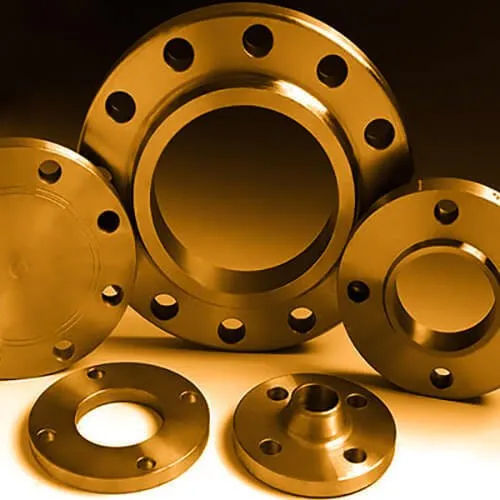
Tell us about your requirement

Price:
Quantity
Select Unit
- 50
- 100
- 200
- 250
- 500
- 1000+
Additional detail
Mobile number
Email

More Products in Copper Nickel Flange Category
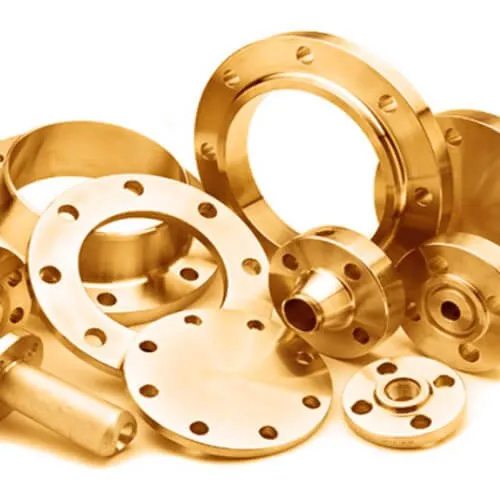
Copper Nickel Flange
Price 2000.00 INR / Piece
Minimum Order Quantity : 20 Pieces
Technics : Other, Forged / Cast
Dimension (L*W*H) : As specified / standard sizes / custom
Material : Copper Nickel (Cupro Nickel), most typically CuNi 90/10 (C70600), CuNi 70/30 (C71500)
Surface : Other, Polished / Smooth

 Send Inquiry
Our Products
- Alloy Plates And Sheets
- Stainless Steel Half Coupling
- SS Hex Bolts
- Pipe Elbows
- Pipes And Pipe Fittings
- STAINLESS STEEL TUBE AND TUBE FITTINGS
- COPPER TUBES AND FITTINGS
- Stainless Steel Pipes
- Stainless Steel Flanges
- Round Bars
- Aluminum And Brass Pipe Fittings
- Saudi Aramco Approved Flanges And Fittings
- Alloy Steel Pipe Fittings
- Hastelloy Pipe Fittings
- Inconel Pipe Fittings
- Titanium Product
- Monel Pipe Fittings
- Carbon Steel Flanges
- Carbon Steel Pipe Fittings
- Nickel Alloy Pipes and Tubes
- Nickel Alloy Forged Fittings
- Surgical Pipes
- Monel Flanges
- Inconel Flanges
- Hastelloy Flanges
- Super Duplex Stainless Steel Pipe Fittings
- Seamless Steel Pipes
- Copper Nickel Flange
- Aluminum Flanges
- Alloy Steel Flanges
- MS product


SHOP NO 06, 89 ISHWAR BHUVAN, KHADILKAR ROAD, KANDAWADI, CHARNI ROAD,Mumbai - 400004, Maharashtra, India

Mr Nikhil Mehta
(Proprietor)
Mobile :07313727068
 Send Inquiry
 Send SMS
Developed and Managed by Infocom Network Private Limited.
